
Looks like you have ended up here at the old History in the News blog through an outdated source.
You can click anywhere on the following link to redirect to the new blog (and magazine website) at www.historytoday.com/blog/books-blog
Also, for anyone with a reader subscription or who has been kind enough to add us to your blogroll, please take a moment to update those links now.
Thanks! See you at www.historytoday.com/blog/books-blog
Thursday 26 August 2010

Monday 26 July 2010
New history books: 26th July
 The Irrepressible Churchill, ed. Kay Halle (Conway)
A new edition of this classic collection by Kay Halle, a Churchill family friend, which records Churchill's military and political careers and his life, both public and private, mainly in his own words.
The Magnificent Mrs Tennant, David Waller (Yale University Press)

This biography of Gertrude Tennant (1819-1918), famous for the salon that she established in her early fifties which attracted celebrities such as Gladstone, Oscar Wilde and Mark Twain, places the London hostess at the heart of a multi-generational, matriarchal family epic but also at the centre of European social, literary and intellectual life.
 Potsdam Station, David Downing (Old Street)
This novel features the Anglo-American journalist John Russell and his German girlfriend Effi Koenen. In April 1945, Russell is in Moscow, his son Paul is on the Oder front line awaiting the Soviet’s final onslaught, and his girlfriend Effi has a Jewish orphan to care for in Berlin. Potsdam Station tells the story of Russell’s attempt to travel to Berlin to save his girlfriend and son before the arrival of the Red Army.
American Foreign Relations Since 1898, Jeremi Suri (Wiley-Blackwell)

This study brings together more than 50 primary documents to reveal how Americans have interacted with the wider world since 1898 and provide an insight into the personalities, arguments and events that shaped conflict and cooperation.
To puchase any of the above books, click on the following links:
The Irrepressible Churchill

The Magnificent Mrs Tennant [Runner-up, Biographers' Club Prize, 2009]

Potsdam Station

American Foreign Relations Since 1898: A Documentary Reader (Uncovering the Past: Documentary Readers in American History)

Tuesday 20 July 2010
New history books: 20th July
 Babylon: Mesopotamia and the Birth of Civilization, Paul Kriwaczek (Atlantic Books)
This account of the rise and fall of Mesopotamian civilization, from the earliest settlements around 5400 BC to the eclipse of Babylon by the Persians in the sixth century BC, focuses on the glory of Babylon whilst also examining its numerous material, social and cultural innovations and inventions.
The Glenn Miller Conspiracy, Hunton Downs (JR Books) 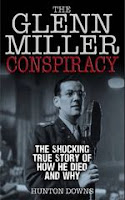
A famous star of the Big Band era, Glenn Miller disappeared in 1944 while supposedly travelling to entertain US troops in France. The official story has always been that his plane crashed and that his body was never found. Based on his extensive study of declassified documents, the author reveals that Miller was never on that plane and tells the story of his work for the US in the Psychological Warfare Division and the events surrounding his death.

A famous star of the Big Band era, Glenn Miller disappeared in 1944 while supposedly travelling to entertain US troops in France. The official story has always been that his plane crashed and that his body was never found. Based on his extensive study of declassified documents, the author reveals that Miller was never on that plane and tells the story of his work for the US in the Psychological Warfare Division and the events surrounding his death.
 The Fields of Death, Simon Scarrow (Headline)
The last volume in Simon Scarrow’s quartet of novels charting the lives of Napoleon and Wellington, The Fields of Death tells the story of the final confrontation between the two military commanders at the Battle of Waterloo on June 18th, 1810.
The House with Blue Shutters, Lisa Hilton (Corvus)

Set in Castroux in France in 1939, this novel tells the story of Oriane, whose world is thrown into chaos following the German invasion of France. She finds work in a Nazi barracks while her fiancé joins the Resistance.
Thursday 15 July 2010
Reader Review: The Media and the Far Right in Western Europe
 Giles Marshall reviews The Media and the Far Right in Western Europe by Antonis A. Ellinas.
By Giles Marshall,
How important is the media to the advance of western European far right parties? This is the crucial question asked by Antonis Ellinas in The Media and the Far Right in Western Europe. The British perspective might seem quite encouraging. Subjected to an hour of questions on the BBC’s ‘Question Time’, Nick Griffin emerged, during the programme, as a far weaker national leader than he entered it. The failure of his British National Party in the 2010 general election would seem to endorse this happy state of affairs. However, the British experience is at variance with the European ones analysed by Ellinas, just as the British polity seems, in any case, rather more resistant to far right advances.
Focusing on the role played by the media, Ellinas provides a close examination of the operation of the far right in four European countries – Austria, Germany, Greece and France – and considers the reasons for their success, or lack thereof. His study cases are carefully chosen, ranging from countries which represent undoubted high water marks of far right advancement in national politics (Austria through the Freedom Party, and France through the Front National), to a clear low water mark in Germany, and a more erratic path in the case of Greece.
Despite the difficulties of generalising from four such disparate examples, Ellinas successfully identifies common areas of analysis and cuts a swathe through the many other factors that arguably determine far right success. His history of the trajectory of the different far right parties is detailed and fascinating and his focus on the impact of the media is key to understanding the success of the far right. Ellinas’ explanation of media actions and pressures, and his overview of the changes in the media industry outlined in his first chapter are amongst some of his most important findings. He itemises what we might only hitherto have grasped in general terms – that the media have a ‘push-pull’ impact on the advance of the far right. They provide the publicity that allows many far right parties the initial impetus to leap into mainstream consciousness, and then provide the sensationalist approach to national identity issues that continues to give them the oxygen to survive. It is a lethal and thoughtless mix, and Ellinas’ identification of it should be required reading in every media company and study centre in Europe.
The strength of this impeccably researched book lies in its lucid use of an extremely wide range of sources, and its focus on a clearly defined aspect of far right success. It is a clearly academic book, and eschews any form of sensationalising, managing to project an admirable academic objectivity throughout. Although it can be heavy going for the general reader, the author’s analysis of the trajectory of the far right in each of his chosen countries is clearly articulated and adds much to any reader’s knowledge of the state of modern European politics. The capture by the right of the once liberal minded Freedom Party in Austria, for instance, provides a cautionary tale of far right tactics in their combination of effective opportunism provided by media reporting, and their tactical outmanoeuvring of more staid internal party opponents.
On a stylistic note, one might wish for fewer lengthy citations in parentheses that break up the flow of sentences in the book’s opening chapter and, occasionally, for simpler sentence structures. However, these are, on the whole, minor inconveniences. Most importantly, The Media and the Far Right in Western Europe represents a significant and valuable addition to the body of work available to study the rise of far right parties in western Europe, whilst also providing considerable food for thought about the way the media treat this phenomenon.
The Media and the Far Right in Western Europe, Antonis A. Ellinas (Cambridge University Press)
Giles Marshall is Head of Politics and Head of Sixth Form at Sutton Grammar School for Boys in London.
Tuesday 13 July 2010
Reader Review: Forgotten Voices of Dunkirk

Clare O’Brien reviews Forgotten Voices of Dunkirk by Joshua Levine.
by Clare O’Brien,
If you are in search of a detailed historical account of the evacuation of the British Expeditionary Force from Dunkirk early in the Second World War, this book is not for you. Aside from a brief foreword by Peter Snow and a short factual introduction to each of the book’s ten chapters, Forgotten Voices of Dunkirk provides no factual overview or analysis of the events that sparked Operation Dynamo.
Nevertheless, the primary source material provided here presents a particularly vivid picture of what it was like to be caught up in history in May-June 1940. The latest in a series of historical anthologies drawing on the Imperial War Museum Sound Archive, the book transcribes accounts by those who personally experienced the events of the time – from the military rank-and-file to officers, nurses, medics, sailors and civilians. Accompanied by contemporary photographs, the reminiscences range from short terse paragraphs, which are more fearsome for what they do not say, to long vibrant accounts by men whose memories have been permanently scarred by their experiences.
Presented in rough chronological order, the accounts reveal how attitudes among ordinary people gradually developed from the preamble of the phoney war to the shock of this first major military defeat. At first, old-fashioned jingoism and xenophobia mingles with a very real excitement at the prospect that ‘something might happen’ to put an end to the drabness of poverty and unemployment at home. Once it does, the tone abruptly changes. Horrors are steadily heaped on horrors and naïve British boys are confronted with a daily nightmare of mutilation, misery and death.
An entire chapter is devoted to the massacre of British prisoners by the Waffen-SS at Le Paradis and Wormhout. However, the smaller horrors are almost harder to take in than such widescreen atrocities. As always, the devil is in the details: a young medic assisting at a hurried amputation (‘what has stayed with me is the weight of that arm. I carried it out into the night, and threw it into a ditch, and it was the weight of it’), a French refugee giving birth in the back of an army truck to the sound of gunfire, a wounded man trying to commit suicide by holding a bullet against his head and detonating it with another.
The accounts of the rescue itself touch upon cowardice and selfishness, as well as bravery and heroism. Men were shot for trying to jump the queue, and some smaller boats sank as they were swamped by panic-stricken soldiers. Surreal episodes abound – men trying to shave before embarking for home, dogs rescued from the beach at Dunkirk, a phalanx of kilted Scots refusing to be taken to Dover and turning around to continue the battle.
Author/compiler Joshua Levine is a playwright and TV scriptwriter. Although his assemblage of ‘forgotten voices’ may not provide much in the way of original thought or new analysis, it nevertheless offers the reader an account of human experiences of Operation Dynamo, which is more personal than history and more powerful than fiction.
Forgotten Voices of Dunkirk, Joshua Levine (Ebury)
by Clare O’Brien,
If you are in search of a detailed historical account of the evacuation of the British Expeditionary Force from Dunkirk early in the Second World War, this book is not for you. Aside from a brief foreword by Peter Snow and a short factual introduction to each of the book’s ten chapters, Forgotten Voices of Dunkirk provides no factual overview or analysis of the events that sparked Operation Dynamo.
Nevertheless, the primary source material provided here presents a particularly vivid picture of what it was like to be caught up in history in May-June 1940. The latest in a series of historical anthologies drawing on the Imperial War Museum Sound Archive, the book transcribes accounts by those who personally experienced the events of the time – from the military rank-and-file to officers, nurses, medics, sailors and civilians. Accompanied by contemporary photographs, the reminiscences range from short terse paragraphs, which are more fearsome for what they do not say, to long vibrant accounts by men whose memories have been permanently scarred by their experiences.
Presented in rough chronological order, the accounts reveal how attitudes among ordinary people gradually developed from the preamble of the phoney war to the shock of this first major military defeat. At first, old-fashioned jingoism and xenophobia mingles with a very real excitement at the prospect that ‘something might happen’ to put an end to the drabness of poverty and unemployment at home. Once it does, the tone abruptly changes. Horrors are steadily heaped on horrors and naïve British boys are confronted with a daily nightmare of mutilation, misery and death.
An entire chapter is devoted to the massacre of British prisoners by the Waffen-SS at Le Paradis and Wormhout. However, the smaller horrors are almost harder to take in than such widescreen atrocities. As always, the devil is in the details: a young medic assisting at a hurried amputation (‘what has stayed with me is the weight of that arm. I carried it out into the night, and threw it into a ditch, and it was the weight of it’), a French refugee giving birth in the back of an army truck to the sound of gunfire, a wounded man trying to commit suicide by holding a bullet against his head and detonating it with another.
The accounts of the rescue itself touch upon cowardice and selfishness, as well as bravery and heroism. Men were shot for trying to jump the queue, and some smaller boats sank as they were swamped by panic-stricken soldiers. Surreal episodes abound – men trying to shave before embarking for home, dogs rescued from the beach at Dunkirk, a phalanx of kilted Scots refusing to be taken to Dover and turning around to continue the battle.
Author/compiler Joshua Levine is a playwright and TV scriptwriter. Although his assemblage of ‘forgotten voices’ may not provide much in the way of original thought or new analysis, it nevertheless offers the reader an account of human experiences of Operation Dynamo, which is more personal than history and more powerful than fiction.
Forgotten Voices of Dunkirk, Joshua Levine (Ebury)
Clare O'Brien is a retired teacher of History and English. She now works as a freelance writer.
If you would like to win and review one of the latest history books, see our latest selection of books for reader review.
Monday 12 July 2010
New History Books: July 12th
 Secret Affairs, Mark Curtis (Profile Books)
Drawing on declassified government files, Secret Affairs reveals how British governments since the 1940s have supported radical Islamic and terrorist groups in Afghanistan, Iran, Iraq, Libya, the Balkans, Syria, Indonesia and Egypt to control oil resources and overthrow governments.
The Liberty Bell, Gary B. Nash (Yale University Press)

The Liberty Bell was originally cast in England in 1751. Now on display in Philadelphia’s Independence Hall, it attracts over two million visitors every year. Charting the impetus behind the bell’s creation, as well as its evolutions in meaning through successive generations, this cultural history explores how the Liberty Bell has become a symbol of the American identity.
 The Last Gasp, Scott Christianson (University of California Press)
The Last Gasp charts, for the first time, the history of the gas chamber in the United States. From its construction in Nevada in 1924 as a ‘humane’ method of execution, to the first uses of the gas chamber after the First World War, the author also explores American and German collaboration in the production and use of hydrogen cyanide and Hitler’s adoption of gas chamber technology developed in the United States.
The Kingdom and People of Kent, AD 400-1600, Stuart Brookes and Sue
 Harrington (The History Press)
This chronological account of the history of the kingdom and people of Kent draws on written, toponymic and archaeological sources to offer insights into the continuities, changes and transformations that produced Anglo-Saxon England out of the remains of Roman Britain.
You may purchase any of the above books, by clicking on the following links:
Secret Affairs: Britain's Collusion with Radical Islam

The Liberty Bell (Icons of America Series)

The Last Gasp: The Rise and Fall of the American Gas Chamber

The Kingdom and People of Kent, AD 40-1066: Their History and Archaeology

Monday 5 July 2010
New History Books: July 5th
 Merchant Kings, Stephen R. Brown (Conway)
Including Robert Clive of the English East India Company and Cecil John Rhodes of the British South Africa Company, the story of six merchant adventurers, who, from 1600 to 1900, founded the world’s greatest monopoly trading corporations. Combining commerce and conquest, they ruled millions of people and vast tracts of land, from Hudson Bay, Dutch Manhattan and southern Africa to India, Indonesia and Russian Alaska.
H.G. Wells: Another Kind of Life, Michael Sherborne (Peter Owen)

This biography draws on published and unpublished sources, including the long-suppressed ‘skeleton correspondence’ with his mistresses and illegitimate daughter, to tell the life story of H.G. Wells, who remains a controversial figure to this day, attacked by some as a philistine, sexist and racist, but also praised as a great writer, a prophet of globalisation and a pioneer of human rights.
 Caravaggio, Andrew Graham-Dixon (Penguin)
This biography of Michelangelo Merisi da Caravaggio charts the dark and dangerous life of the painter in the worlds of Milan, Rome and Naples in the late 16th and early 17th centuries. Graham-Dixon reveals the identities of the ordinary people that Caravaggio used for his depictions of classic religious scenes and provides an account of the circumstances of Caravaggio’s death, aged 38, when he fell victim to a vendetta attack.
Model Nazi, Catherine Epstein (Oxford University Press)
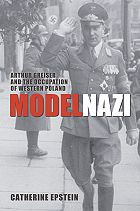
A biography of Arthur Greiser, the man who initiated the final solution in Nazi-occupied Poland, from his birth in the German-Polish borderlands, to his pre-war rise to Nazi prominence in Danzig, his actions as party leader in the Warthegau, and his trial and execution in postwar Poland.
If you wish to purchase any of the above books, click on the following links:
H.G. Wells: Another Kind of Life

Caravaggio: A Life Sacred and Profane

Model Nazi: Arthur Greiser and the Occupation of Western Poland (Oxford Studies in Modern European History)

Thursday 1 July 2010
July selection of books for reader review
Every month, we offer our readers the opportunity to review some of the latest history publications and to have their review published on the History Today Books Blog. Here is our summer selection. To submit a review, please send an email to Kathryn Hadley (k.hadley[at]historytoday.com) specifying your choice of book. We will then send you the book with a one-month deadline to send us your review. Books will be sent on a first come first served basis. (Unfortunately, we are unable to send out books to the USA).
 Young Mandela, David James Smith (Weidenfeld & Nicolson)
This biography of Nelson Mandela charts his political and personal life before his imprisonment. Drawing on the testimonies of Mandela’s closest friends and family, the author focuses on Mandela as a person, and a young radical – a side of him which is often overshadowed by his reputation as one of the world’s greatest idols.
H.G. Wells: Another Kind of Life, Michael Sherborne (Peter Owen)
This biography draws on published and unpublished sources, including the long-suppressed ‘skeleton correspondence’ with his mistresses and illegitimate daughter, to tell the life story of H.G. Wells, who remains a controversial figure to this day, attacked by some as a philistine, sexist and racist, but also praised as a great writer, a prophet of globalisation and a pioneer of human rights.
The Stalin Epigram, Robert Littell (Duckworth Overlook)
A fictionalised account based on the true story of one of Russia’s most prominent 20th century poets, Osip Mandelstam, who was arrested when his poem the Stalin Epigram, an indictment of Stalin and his collectivisation programmes written in 1934, was discovered by the secret police.
The Excellent Mrs Fry, Anne Isba (Continuum)
A bigraphy of the Quaker prison reformer Elizabeth Fry (1780-1845), which focuses on her lifelong work to improve the welfare of female prisoners and convicts bound for Australia in Britain and continental Europe.
Warlord, Carlo D’Este (Penguin)
This paperback version of D’Este’s biography of Winston Churchill traces Churchill’s life through his military adventures, from his days as a schoolboy to the young man captured in the Boer War, and from his 1915 Dardanelles campaign as first Lord of the Admiralty to his triumph in the Second World War.
The Most Powerful Idea in the World, William Rosen (Random House)
Focusing on the invention of the steam engine, this account charts the experiments and accomplishments of inventors that led to the Industrial Revolution, as they first came to own and profit from their ideas.
The Ninth: Beethoven and the World in 1824, Harvey Sachs (Faber & Faber)
A study of Beethoven’s Ninth Symphony, which places the premiere of the composition, in 1824, in its historical context to explain how it was emblematic of the High Romantic period and represented a magisterial humanistic statement.
The Silent Duchess, Dacia Maraini (Arcadia Books)
Set in Sicily in the mid-18th century, this historical novel tells the story of the noble Ucria family, seen through the eyes of the deaf-mute Duchess Marianna.
Caravaggio, Andrew Graham-Dixon (Penguin)
This biography of Michelangelo Merisi da Caravaggio charts the dark and dangerous life of the painter in the worlds of Milan, Rome and Naples in the late 16th and early 17th centuries. Graham-Dixon reveals the identities of the ordinary people that Caravaggio used for his depictions of classic religious scenes and provides an account of the circumstances of Caravaggio’s death, aged 38, when he fell victim to a vendetta attack.
 Young Mandela, David James Smith (Weidenfeld & Nicolson)
This biography of Nelson Mandela charts his political and personal life before his imprisonment. Drawing on the testimonies of Mandela’s closest friends and family, the author focuses on Mandela as a person, and a young radical – a side of him which is often overshadowed by his reputation as one of the world’s greatest idols.
H.G. Wells: Another Kind of Life, Michael Sherborne (Peter Owen)
This biography draws on published and unpublished sources, including the long-suppressed ‘skeleton correspondence’ with his mistresses and illegitimate daughter, to tell the life story of H.G. Wells, who remains a controversial figure to this day, attacked by some as a philistine, sexist and racist, but also praised as a great writer, a prophet of globalisation and a pioneer of human rights.
The Stalin Epigram, Robert Littell (Duckworth Overlook)
A fictionalised account based on the true story of one of Russia’s most prominent 20th century poets, Osip Mandelstam, who was arrested when his poem the Stalin Epigram, an indictment of Stalin and his collectivisation programmes written in 1934, was discovered by the secret police.
The Excellent Mrs Fry, Anne Isba (Continuum)
A bigraphy of the Quaker prison reformer Elizabeth Fry (1780-1845), which focuses on her lifelong work to improve the welfare of female prisoners and convicts bound for Australia in Britain and continental Europe.
Warlord, Carlo D’Este (Penguin)
This paperback version of D’Este’s biography of Winston Churchill traces Churchill’s life through his military adventures, from his days as a schoolboy to the young man captured in the Boer War, and from his 1915 Dardanelles campaign as first Lord of the Admiralty to his triumph in the Second World War.
The Most Powerful Idea in the World, William Rosen (Random House)
Focusing on the invention of the steam engine, this account charts the experiments and accomplishments of inventors that led to the Industrial Revolution, as they first came to own and profit from their ideas.
The Ninth: Beethoven and the World in 1824, Harvey Sachs (Faber & Faber)

A study of Beethoven’s Ninth Symphony, which places the premiere of the composition, in 1824, in its historical context to explain how it was emblematic of the High Romantic period and represented a magisterial humanistic statement.
The Silent Duchess, Dacia Maraini (Arcadia Books)
Set in Sicily in the mid-18th century, this historical novel tells the story of the noble Ucria family, seen through the eyes of the deaf-mute Duchess Marianna.
Caravaggio, Andrew Graham-Dixon (Penguin)
This biography of Michelangelo Merisi da Caravaggio charts the dark and dangerous life of the painter in the worlds of Milan, Rome and Naples in the late 16th and early 17th centuries. Graham-Dixon reveals the identities of the ordinary people that Caravaggio used for his depictions of classic religious scenes and provides an account of the circumstances of Caravaggio’s death, aged 38, when he fell victim to a vendetta attack.
Subscribe to:
Posts (Atom)