Monday, 27 April 2009

This week's new books!


Like Eating a Stone, Wojciech Tochman (Portobello Books)
A portrait of the human devastation wrought by the Bosnian Wars and their aftermath told through the stories of women who are still looking for the families they have lost.


Caleb Williams
, William Godwin (Oxford University Press)
A new edition of the original novel dating from 1794, which tells the story of Caleb, the servant of the country gentleman Ferdinando Falkland, and is a political allegory, inspired by the events of the decade following the French Revolution and reflecting the sense of injustice felt by victims of British law.


Barbarism & Civilisation: A History of Europe in Our Time, Bernard Wasserstein (Oxford University Press)
An account of the 20th century in Europe, which covers a wide range of topics, from war and politics to social, cultural and economic change.


Sasanian Persia: The Rise and Fall of an Empire, Touraj Daryaee (I.B. Tauris)
An account of Sasanian Persia, which considers Sasanian life and unravels the various elements which contributed to the making of the empire, demonstrating the significance of the Sasanians, for both the development of Iranian civilisation and for Roman and Islamic history.

Friday, 24 April 2009

Summarise your Top 10 history books and WIN

Now you have the chance to win your choice of our favourite history books each month. To do so, all you need to do is tell us your top 10 history books of all time. Drop us an email, or comment here on the books blog.

This week, History Today editor Paul Lay, dusts down some tomes and tells us his personal favourites:

1. David Landes, The Wealth and Poverty of Nations (Abacus, 1999)

Why, after the Industrial Revolution, some countries gained great prosperity and other sank into penury. The availability of clocks and spectacles can be more important than economic resources but, Landes concludes, it is better to ‘live to work, than work to live’. Timely advice.


2. Thucydides, The Peloponnesian War (Penguin Classics, 2000)

The long conflict between Greece and Sparta that took place in the fifth century BC is the subject of one of the earliest – and still one of the best – narrative histories ever written.


3. Christopher Bayly and Tim Harper, Forgotten Armies: Britain’s Asian Empire and War with Japan (Penguin, 2005)

A magisterial, sometimes irreverent account of the collapse of British possessions in Asia during the Second World War, and the desperate, grubby attempt to claw them back.


4. John Adamson, The Noble Revolt: The Overthrow of Charles I (Phoenix, 2009)

First in a proposed two volume history of the English Civil Wars by one of our finest young historians. Combines riveting narrative with cutting-edge scholarship. Has transformed our understanding of 17th-century Britain.


5. Derek Birley, A Social History of English Cricket (Aurum, 2003)

Engrossing account of the origins and development of the most beautiful, complex and compelling game ever invented. The pen portraits of the great and good are vivid and, in the case of Lord Hawke, hilarious.


6. Raphael Samuel, Island Stories (Verso, two vols, 1996)

The much-missed Samuel was that rarity, a left-wing historian who loved his country, though was never afraid to cast a pitiless eye upon its foibles and contradictions. A masterclass in clarity and incision.


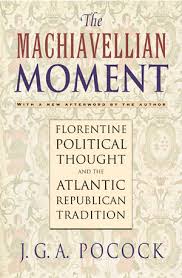
7. J.G.A. Pocock, The Machiavellian Moment: Florentine Political Thought and the Atlantic Republican Tradition (Princeton, 1975)

Classic study of how Italian political thought was transmitted to the New World via early modern England.


8. Jenny Uglow, The Lunar Men: The Friends Who Made the Future (Faber, 2003)

Learned but hugely entertaining account of the five amateur scientists of the 18th century who met in Birmingham’s Soho House on nights with a full moon and whose ideas gave birth to the modern world.


9. Michael Burleigh, The Third Reich: A New History (Pan, 2001)

The best book ever written in English on a subject about which far too many words have been spilt. Moral, caustic and profound.


10. Bernard Porter, The Lion’s Share: A Short History of British Imperialism, 1850-2004 (Longman, 2004)

Single-volume overview of British imperialism that manages to be entertaining, illuminating and wonderfully personal. The latest edition contains the author’s pithy observations on Britain’s status post-Iraq War.

The Lost World of Communism: An Oral History of Daily Life Behind the Iron Curtain

Taylor Downing reviews Peter Molloy's new book on the lost culture of the Eastern bloc

Apparently in Germany today there is a growing nostalgia for the days of the Democratic Republic – there is a GDR-themed youth hostel and a revival of interest in kitsch East German design. There is even a word for it in German, Ostalgie or ‘nostalgia for the East’. I am glad to say there is no sense of nostalgia in The Lost World of Communism, which recalls the horrors of Communism in East Germany, Czechoslovakia and Romania.

This is the book of the BBC TV series marking the 20th anniversary of the collapse of Communism in eastern Europe. It allows the ‘talking heads’ to be quoted at greater length than in the TV series, which is much to be welcomed. And it is part of that explosion of oral histories published by Ebury, often in the strand Forgotten Voices.

Peter Molloy relates the story of each individual with a minimum of context and then quotes extensively from interviews. This is the strength and the weakness of this type of history. If you like oral histories you’ll love this book. If you seek out explanation and analysis you’ll find these accounts frustrating and cursory. But the range of 50 or so characters in the book makes fascinating reading. There is an East German border guard, a leading member of the Politburo, a Czech cosmonaut, a transvestite East German athlete, a Lutheran pastor, a female prisoner who fell in love with her Stasi interrogator (they finally married in 2006) and a sexologist who claims that East German women had a much higher number of orgasms than women in the West.

For me, nothing here matches up to the revelations of life in East Germany in Anna Funder’s compelling Stasiland. But the material about Romania under Ceausescu is remarkable. Abortions were banned to keep up population growth and women workers were regularly inspected to ensure they were not terminating pregnancies. The Securitate bugged anyone, including the president. The weirdly obsessive behaviour of Nicolae and Elena Ceausescu is related by those who had to sustain it. And their grisly end is recounted by the man who led the execution squad.

Much of the apparatus of these appalling states happily crumbled with the Berlin Wall but the climate of fear they generated left a moral devastation that will take longer to heal. The former Czech President Vaclav Havel reckons it will be two generations before the footprint of Communism has been fully washed away.

Monday, 20 April 2009

The Mexican Wars for Independence


Timothy J. Henderson (Hill and Wang)

An account of the Mexican Wars of Independence (1810-1821), a battle for social and political reform rather than mere political independence, which traces the major leaders and conflicts and explores the complicated meaning of independence for Mexico’s past and present.

San Martin: Argentine Soldier, American Hero


John Lynch (Yale University Press)

A biography of Jose de San Martin, which sheds new light on one of the great leaders in the liberation of Chile and Peru and on the story of Spanish America’s revolutionary wars.

The Bible and the People


Lori Anne Ferrell (Yale University Press)

A cultural history of the Bible over the past thousand years, from ancient manuscript to the Gutenberg volumes, which discusses the Bible’s impact on readers over the centuries and how readers in turn made their mark upon the Bible.

The Legend of the Middle Ages


Remi Brague (University of Chicago Press)

Featuring a series of essays and an interview, which explore the relationships between Christian, Jewish and Muslim thinkers in the Middle Ages, this volume seeks to reconstruct this complicated and philosophically rich period, revealing its philosophical and theological nuances and its lessons for our own times.

Wednesday, 15 April 2009

The Pope’s Legion


The Pope’s Legion: The Multinational Fighting Force that Defended the Vatican
Charles A. Coulombe

(Palgrave Macmillan)

The story of the Papal Zouaves, a band of 20,000 Catholics, from France, Belgium, Spain, Ireland and Austria, who were summoned by the Pope in the 19th century to defend the Vatican City from attack, in the midst of the Italian Wars of the
Risorgimento.

Old World, New World


Old World, New World: The Story of Britain and America
Kathleen Burk
(Abacus)


The story, told from both sides, of the 400 year old Anglo-American relationship, from the very first settlers to the American Revolution and Civil War, from the global conflicts of the 20th century to Tony Blair’s support of George W. Bush, and to the exchange of culture, manners and romance.

He Knew He Was Right


The Irrepressible Life of James Lovelock and Gaia
John & Mary Gribbin

(Allen Lane)


A biography of an iconic figure in British science, best known as the father of the Gaia theory, now an established method of understanding and responding to dramatic changes in the earth's environment.

Grimoires


Grimoires: A History of Magic Books
Owen Davies
(Oxford University Press)

A story of magic spells including ancient Egypt, medieval sorcery, Scandinavian witchcraft, West African folk religion and the Santa Muerte cult prevalent among Mexico’s drug gangs. Also provides an insight into the history of religion, early science, publishing and censorship.

Wednesday, 8 April 2009

The Great Caliphs


Amira K. Bennison
I.B. Tauris

An account of the achievements of the ‘Abbasid age, which challenges popular conceptions about the Arab conquests, revealing significant continuity between the ‘Abbasid caliphate, which flourished between 750 and 1258, and the great civilizations of antiquity which it overran.

Giants


John Stauffer
Little Brown

A dual-biography of Frederick Douglass and Abraham Lincoln, which describes the transformations in the lives of the two men and their personal and political struggles at a time of social and cultural change, when men rejected the status quo and embraced new ideas of personal liberty.

Catherine the Great


Simon Dixon
Profile Books

A biography of Catherine the Great, which portrays the ruler, for 34 years, of the largest state in existence since the fall of the Roman Empire, against the background of the court society in which she grew up.

Alan Villiers


Kate Lance
National Maritime Museum

A biography of the writer, journalist, photographer, film-maker and voyager, Alan Villiers, based on his own journals and private notebooks, which interweaves Villiers’ personal story with that of commercial sail and takes a close look at the complex man behind numerous classic seafaring books and articles.
 
Blog Directory